
The best way to get paid on time in Australia is to agree clear payment terms in writing before you supply, put them on every invoice, check a customer's credit before you give them an account, and follow a fixed reminder schedule the day an invoice goes overdue. Business-to-business credit terms of 7, 14, 21 or 31 days are common. When reminders fail, the usual path is a letter of demand, then a debt collector or legal action, and sometimes a decision to write the debt off and recover the GST. This guide sets out each step for an owner or finance lead.
Setting payment terms
Payment terms are part of your sales contract. The Australian Government's business.gov.au guidance says they should tell the customer which payment methods you accept, when payment is due, whether you offer credit, and how you collect overdue debts, and that they should appear on your invoices and contracts. Choose terms that fit your industry and your cash flow:
| Terms | Typical use | Cash flow effect |
|---|---|---|
| Payment on order or deposit | Custom work, special orders, new customers | Best: cash before cost |
| Payment on delivery or completion | Trades, small jobs, retail customers | Good |
| 7 or 14 days | Small business customers, service work | Manageable |
| 21 or 31 days | Established trade accounts | Needs working capital |
| Longer terms | Large customers who set their own terms | Plan financing in advance |
Write terms as a date, not a vague phrase. "Due 14 days from invoice date" or "Due by 20 November 2026" is clear. "Net 30" means different things to different people.
Selling to large businesses
Large businesses with consolidated revenue of AUD 100 million or more must report their payment times to small business suppliers under the Payment Times Reporting Scheme. The published reports let you see how quickly a large customer actually pays before you accept its terms, and give you a reasonable basis for negotiating.
Giving credit safely
business.gov.au suggests three protections when you offer credit:
- Run a credit check before opening a trade account: trade references, a credit reporting agency, and a search of the business's ABN details.
- Set a credit limit per customer and review it when the customer asks for more or starts paying late.
- Keep ownership until paid. Make clear in your terms that the customer does not own the goods until they are paid for in full. Get legal advice on how to make this effective for your business.
Use a credit application form that captures the customer's legal name, ABN, directors or owners, accounts contact and agreement to your terms. The ABN also goes on any tax invoice of AUD 1,000 or more; see our guide to tax invoice requirements in Australia.
A reminder schedule that works
Most late payments are oversights, so start politely and escalate on a fixed timetable:
| Day | Action |
|---|---|
| 3 days before due | Friendly email with the invoice attached and bank details |
| Due date + 1 | Polite reminder: "Our records show this invoice is now due" |
| Due date + 7 | Phone call to the accounts contact; ask for a payment date |
| Due date + 14 | Second email confirming the promised date; consider placing the account on hold |
| Due date + 30 | Formal overdue notice; stop further supply on credit |
| Due date + 45 to 60 | Letter of demand, after checking your contract |
Keep notes of every call and promise in the customer record. If you end up in a dispute, a dated history is evidence.
A worked example: a regional machinery dealer
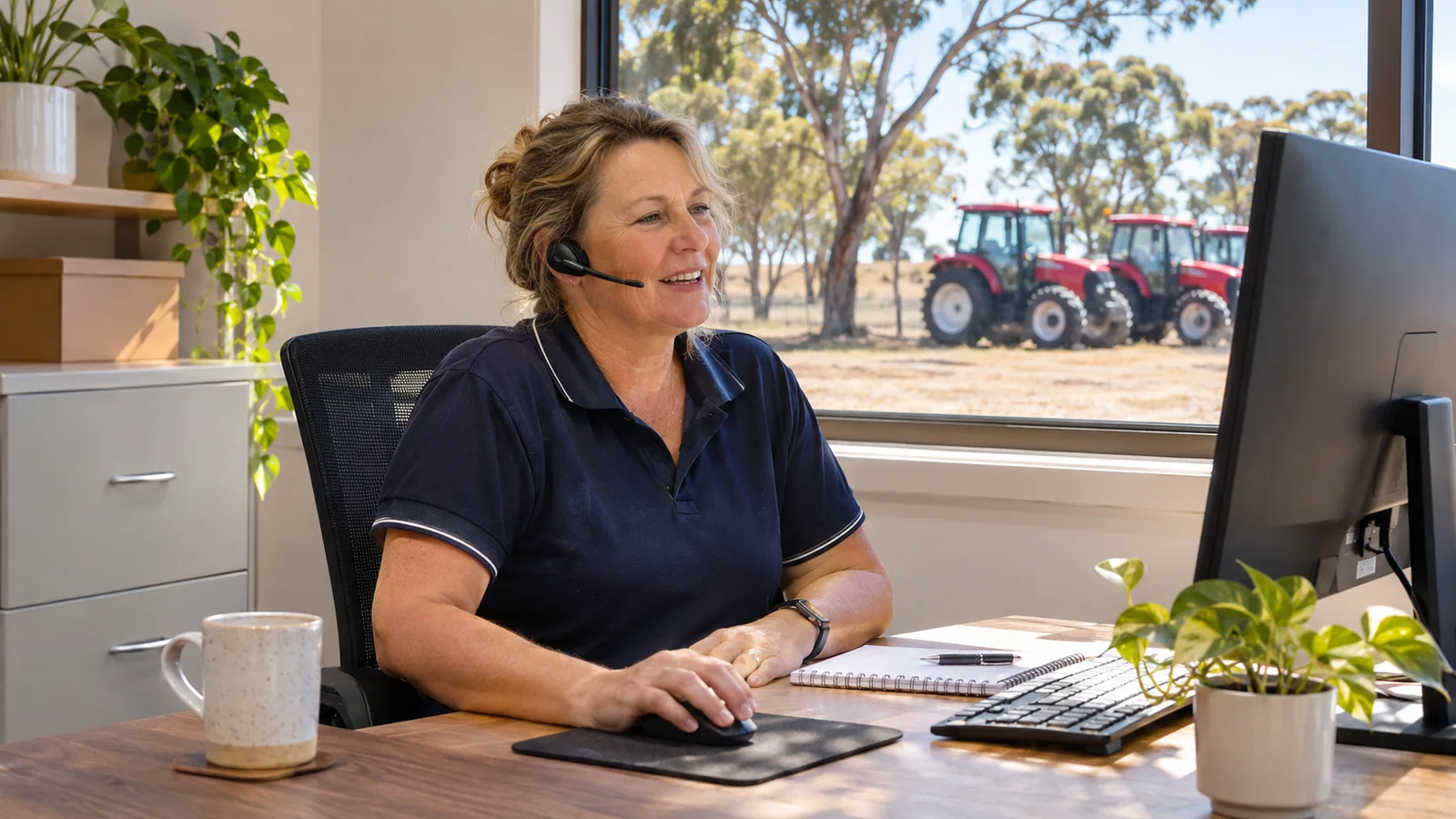
Riverina Ag Machinery, a fictional dealer in Wagga Wagga, had AUD 640,000 in trade debtors at the end of September against quarterly credit sales of AUD 1.2 million. Its days sales outstanding (DSO) were therefore about 640,000 divided by 1,200,000, multiplied by 91 days: roughly 49 days, on stated terms of 30 days.
The office manager introduced three changes: a credit application for every new account, the reminder schedule above run every Monday from the aged debtors report, and account holds at 30 days overdue. By the end of the following March, debtors had fallen to AUD 470,000 on similar sales, cutting DSO to about 36 days and freeing about AUD 170,000 of cash, roughly the cost of carrying an extra tractor in stock. Nothing about the terms changed; the discipline did.
When reminders fail
Check your contract first
Before escalating, business.gov.au suggests checking your contract for the payment conditions and debt recovery options you agreed. If the agreement was verbal, gather proof such as emails or texts.
Letter of demand
A letter of demand sets out the debt, the invoices it relates to, the date by which payment must be made, and what you will do if it is not. Keep it factual and avoid threats you do not intend to carry out.
Debt collection or legal action
A debt collection service goes a step further and signals that you have handed the matter to professionals. For larger debts, small claims tribunals or courts in your state or territory are an option; get advice on costs first. Chasing payments takes time and money, and sometimes the best option is to stop chasing and write the debt off.
Writing off a bad debt: GST and income tax
When a debt is truly lost, recover the tax you have already paid on it:
- GST. If you account for GST on an accruals basis, you paid GST when you issued the invoice. The ATO allows a decreasing adjustment when the debt is written off as bad, or has been overdue for 12 months or more. For a fully taxable sale it is one eleventh of the amount. On the cash basis no GST was paid, so no adjustment is needed. Our guide to cash or accrual GST accounting explains the difference.
- Income tax. Under ATO rules, a bad debt is generally deductible only if the amount was included in your assessable income and the debt is written off as bad before the end of the income year. That makes June the month to review old debts; see our EOFY checklist for small businesses.
If you later recover a debt you wrote off, you will need to reverse the adjustment. Check the details with the ATO or your adviser.
Improving cash flow beyond chasing
Chasing is the last line of defence. business.gov.au's cash flow guidance suggests several ways to get paid sooner in the first place:
- Ask for deposits on special orders and custom work, so you are not funding stock that only one customer wants.
- Offer early payment incentives, such as a small discount for payment within seven days. Price the discount against what late payment costs you.
- Consider late payment fees, but only if they are in your written terms and the customer agreed to them before supply. Get advice on how to word them.
- Invoice immediately. An invoice sent a week late is paid a week late. Progress claims on longer jobs keep cash moving.
- Make paying easy. Put bank details and a payment reference on every invoice, and accept the payment methods your customers use.
Review your terms once a year. If a customer group consistently pays late, it may be cheaper to shorten their terms, ask for deposits or stop offering them credit than to keep chasing.
Systems that keep debtors under control
- Every invoice issued the day the work is done or the goods ship
- Due dates calculated from the customer's terms, not typed
- An aged debtors report reviewed weekly, not monthly
- Credit limits checked automatically when a new order is entered
- Payments matched to invoices daily from the bank feed
- Call notes and promises stored against the customer
An ERP such as Fininvo keeps sales orders, invoices, customer accounts and the ledger in one system, so overdue balances can be checked when the next order is taken, not after it ships.
Rules checked in November 2026 against ATO and business.gov.au guidance. This article is general information, not tax or legal advice; confirm current rates and thresholds with the ATO or a qualified adviser.
FAQ
What payment terms are normal in Australia?
Business-to-business credit terms of 7, 14, 21 or 31 days are common, but terms vary by industry. Your industry association or a business adviser can tell you what is usual.
Do I have to put payment terms on my invoices?
It is strongly recommended. business.gov.au advises listing payment methods and terms on invoices and contracts so customers know when and how to pay.
When should I send a letter of demand?
After polite reminders and a phone call have failed, and after you have checked your contract. Many businesses send one 45 to 60 days after the due date.
Can I claim back GST on an unpaid invoice?
If you account for GST on an accruals basis, you can claim a decreasing adjustment once the debt is written off as bad or has been overdue for 12 months or more.
What are payment times reports?
Reports that large businesses with consolidated revenue of AUD 100 million or more must publish on how quickly they pay small business suppliers.
How do I calculate days sales outstanding?
Divide trade debtors by credit sales for a period and multiply by the number of days in that period. Compare the result with your stated terms.
How Fininvo handles this
Fininvo ERP covers the work in this guide. See how it works:
Topics
Share this article
Get new articles by email
Practical guides on GST, bookkeeping and running a business in Australia. Unsubscribe anytime.
Related articles



Fininvo ERP
Run accounts, GST and inventory in one place
Invoices, purchases, stock and tax reports stay in sync. Start your 14-day free trial.