
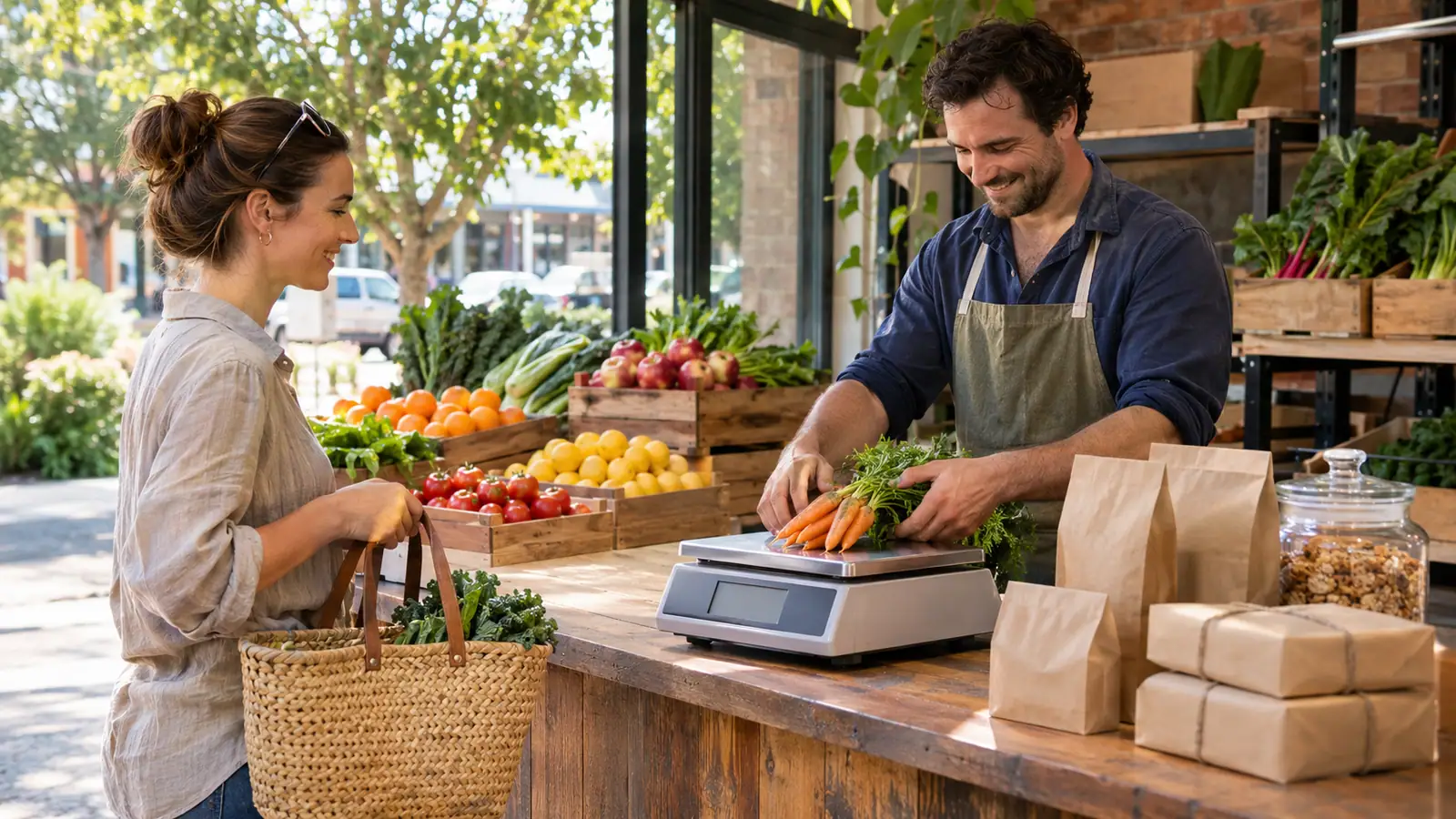
GST-free and input-taxed sales look the same to your customer, because neither has GST added to the price. The difference is on your side of the ledger. When you make a GST-free sale, you can still claim back the GST included in the costs of making it. When you make an input-taxed sale, you generally cannot claim the GST on the related costs. That single rule decides whether the GST you pay on rent, stock, repairs and fees is recovered or becomes a cost of doing business, so coding your sales correctly matters well beyond the sales line on your BAS.
The three kinds of sale under Australian GST
| Type | GST charged to customer | Claim GST on related costs | Common examples |
|---|---|---|---|
| Taxable | Yes, 10% | Yes | Most goods and services |
| GST-free | No | Yes | Basic food, exports, most health and education services, water and sewerage, some child care |
| Input-taxed | No | Generally no | Financial supplies such as lending money; renting out or selling existing residential premises |
The GST Act sets the rate on taxable supplies at 10%. Everything that is not GST-free or input-taxed, and is made in the course of an enterprise by a registered business, is generally taxable.
GST-free sales in detail
The ATO lists the main GST-free categories as basic food, exports, most education and health services, water and sewerage, and some child care. A few practical points:
Basic food
Food rules are where most coding errors happen, because the same shop can sell GST-free and taxable items side by side. Under ATO guidance:
- Fresh, frozen, dried, canned or packaged fruit and vegetables are GST-free.
- Raw, fresh or frozen meat is GST-free.
- Unflavoured milk is GST-free; flavoured milk such as chocolate milk is taxable.
- Plain bread is GST-free; bread with a sweet filling or coating is taxable.
- Soft drinks and ice cream are taxable. Fruit or vegetable juice with at least 90% juice content is GST-free.
- Food eaten on the premises, and hot food, is generally taxable even if the same item would be GST-free from the grocery shelf.
The ATO publishes a detailed list of food and beverage products. When you add a new line to your range, check it there rather than guessing.
Exports
Goods exported from Australia are generally GST-free, provided the conditions in the ATO guidance are met, including time limits for the export and evidence that the goods left the country. Keep the shipping documents with the invoice.
Health and education
Most health and education services are GST-free, but "most" is doing real work in that sentence. Whether a particular service qualifies depends on the type of service and who provides it. A physiotherapy clinic that also sells branded water bottles has taxable sales too.
Input-taxed sales in detail
The two input-taxed categories most businesses meet are financial supplies and residential property.
- Financial supplies include lending money or providing credit for a fee. A wholesaler that earns interest on its bank account, or charges interest on overdue customer accounts, is making financial supplies.
- Residential rent. Renting out residential premises is input-taxed. The ATO says you also cannot claim GST included in costs relating to the rental, such as agent's commission or repairs and maintenance.
- Selling existing residential premises is input-taxed. Selling new residential premises is generally a taxable sale, which catches out small builders and developers.
Commercial rent is different: leasing a shop, office or warehouse is generally taxable, so a registered landlord charges GST on commercial rent and the tenant can claim it back.
A worked example: a Fremantle greengrocer with a flat upstairs
Hillside Fresh, a fictional greengrocer in Fremantle, is registered for GST and owns its building. The ground floor is the shop; the flat upstairs is rented to a tenant. In one quarter:
| Item | Amount | Treatment |
|---|---|---|
| Fresh fruit and vegetables sold | AUD 84,000 | GST-free, no GST charged |
| Soft drinks, ice cream and snacks sold, incl. GST | AUD 13,200 | Taxable, GST AUD 1,200 |
| Residential rent from the flat | AUD 7,800 | Input-taxed, no GST charged |
| Shop refrigeration repair, incl. GST | AUD 2,200 | Claim GST AUD 200 (used for GST-free and taxable sales) |
| Plumbing repair in the flat, incl. GST | AUD 1,100 | No claim: relates to input-taxed rent |
The refrigeration repair supports the shop, whose sales are GST-free and taxable, so the full AUD 200 of GST is claimable. The plumbing repair supports the residential rental, which is input-taxed, so its AUD 100 of GST cannot be claimed and is simply part of the cost of the repair. If a cost serves both, such as a building insurance policy, it has to be apportioned on a fair and reasonable basis. Check the ATO guidance on apportionment for the method that suits your business.
Mixed sales
Some sales combine taxable and non-taxable parts. The ATO's rule is that if a sale can be separated into identifiable parts and some of those parts are GST-free or input-taxed, the sale is partly taxable, and you pay GST only on the taxable part. A hamper containing fresh fruit (GST-free) and a bottle of wine (taxable) is the classic example. Price each component, or apportion the total on a reasonable basis, and show the taxable extent on the tax invoice. Our guide to tax invoice requirements in Australia explains how to show mixed lines.
How the difference shows on your BAS
- GST-free sales are part of your total sales at G1, but carry no GST at 1A. Businesses on the full reporting method also show export sales at G2 and other GST-free sales at G3.
- GST on purchases that relate to GST-free and taxable sales goes in 1B.
- GST on purchases that relate to input-taxed sales is generally left out of 1B.
If most of your sales are GST-free, your BAS may regularly show a refund, because you pay GST on costs but collect little on sales. That is normal, but it also draws attention, so make sure every claim is backed by a tax invoice. Our BAS preparation checklist covers the review steps.
Setting up tax codes correctly
- Create separate codes for taxable, GST-free, export and input-taxed sales, and the matching purchase codes.
- Assign a default code to every product in your item list, checked against ATO guidance, rather than letting staff choose at the till.
- Code costs by what they are used for: shop costs to taxable and GST-free activity, rental property costs to input-taxed activity.
- Review new product lines before the first sale, especially food items that sit near the line between basic food and taxable food.
- Run a quarterly report of sales by tax code and compare it with what you expect from your range.
An ERP such as Fininvo lets you hold the tax code on each item, so the same code is applied on every invoice and receipt that item appears on. The decision about which code is right still has to come from the ATO's rules.
Questions to ask before you add a new product or income stream
Most GST-free and input-taxed errors start on the day a business tries something new: a café that starts selling bags of coffee beans, a hardware store that begins renting out a residential unit it bought next door, a clinic that adds a retail shelf. Before the first sale, work through these questions:
- Is it a good, a service, property or a financial supply? The answer points you to the right part of the ATO guidance.
- Does it appear in an ATO GST-free category? For food, check the ATO's detailed food and beverage list, not the general description.
- Is the buyer outside Australia? Exports can be GST-free, but only if the conditions and evidence rules are met.
- Is it residential or commercial property? Residential rent is input-taxed; commercial rent is generally taxable.
- Which costs will it use? If it is input-taxed, set up separate expense codes so the GST on those costs is not claimed.
- Will it be sold together with something else? If so, decide how you will separate the taxable part on the invoice.
Write the answer down with a link to the ATO page you relied on. If the ATO later asks why an item was treated as GST-free, a dated note is far more persuasive than a recollection.
Mistakes that change your BAS
- Coding a whole grocery basket as GST-free when it includes soft drinks, flavoured milk or ice cream
- Claiming GST on repairs and agent fees for a residential rental property
- Treating the sale of a newly built home as input-taxed
- Charging GST on exports because the paperwork was not kept
- Assuming every service from a health or education business is GST-free
Rules checked in November 2026 against ATO guidance. This article is general information, not tax or legal advice; confirm current rates and thresholds with the ATO or a qualified adviser.
FAQ
What is the main difference between GST-free and input-taxed?
Neither has GST added to the price, but you can claim GST on costs related to GST-free sales, and generally cannot claim GST on costs related to input-taxed sales.
Is residential rent GST-free?
No. Renting out residential premises is input-taxed, which means no GST is charged and you generally cannot claim GST on related costs such as repairs or agent's commission.
Is commercial rent subject to GST?
Generally yes. A registered landlord charges GST on commercial rent, and a registered tenant can usually claim it back.
Do GST-free sales count towards the GST registration threshold?
Yes. GST-free sales count towards GST turnover. Input-taxed sales do not. See our guide to GST registration in Australia.
Is all food GST-free?
No. Basic food such as fresh fruit, vegetables, meat, plain bread and unflavoured milk is GST-free, but items such as soft drinks, ice cream and food eaten on the premises are generally taxable.
What if one cost relates to both kinds of sale?
Apportion it on a fair and reasonable basis, and claim only the share that relates to taxable and GST-free activity.
Topics
Share this article
Get new articles by email
Practical guides on GST, bookkeeping and running a business in Australia. Unsubscribe anytime.
Related articles
Fininvo ERP
Run accounts, GST and inventory in one place
Invoices, purchases, stock and tax reports stay in sync. Start your 14-day free trial.